

(Frailecillo atlántico)
Ayer volví a casa con 1200 fotos. Alguien me tiene que controlar cuando voy a estos sitios porque me vuelvo loco con tanto pájaro. Las colonias de aves marinas te atrapan con sus sonidos y olores. Ayer salí de casa a la 1 y volví a las 9.
Antes de visitar la colonia hice una parada rápida en el estuario del Ythan, donde pude ver al eider real no muy cerca y donde fui recompensado con una pareja de charrancitos pescando muy cerca.


Era la primera vez que he disfrutado de estas golondrinas del mar tan cerca. Su forma de pescar es bastante más delicada que la de otros charranes, dejandose caer sobre el agua y cogiendo peces de la superficie.
Después de esto me fui a la colonia de aves marinas Bullers O´Buchan, donde mi principal objetivo eran los frailecillos y que voy a dejar para el final.
El día fue bastante ventoso, lo que daba muchas oportunidades para hacer fotos en vuelo de alacas y araos sobre todo.


Son verdaderos misiles que, a veces, te pasan volando a menos de 1m!
En un par de sitios los araos están encima de los acantilados y te dejan acercarte todo lo que quieras.


Te quedas maravillado mientras disfrutas de estas aves a escasos metros. Hubo un arao que lleguó volando y se posó justo en el límite de mi distancia de enfoque...

Ese color y textura de chocolate que tienen es tremendo.
Seguimos ahora con sus primas las alcas, que para mí están ahí en el top 3 junto con el frailecillo y arao aliblanco en el ranking de aves marinas.


Las alcas son las terceras más comunes de los alantilados después de los araos y gaviotas tridáctilas, aunque no tiene problemas para compartir piso.

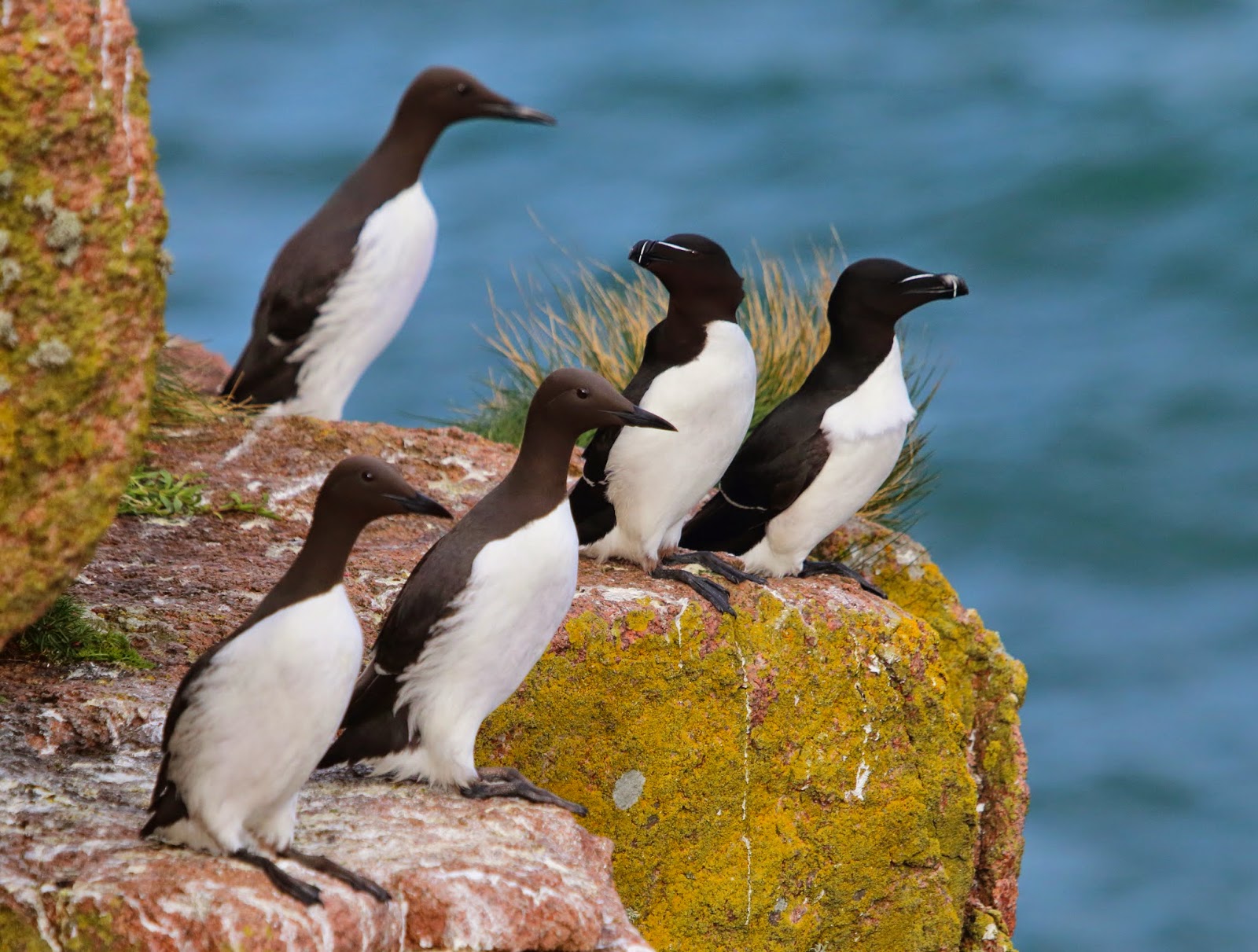
Las alcas prefieren la parte alta de los acantilados, lo que te da bastante oportunidades para verlas de cerca.


Bueno, creo que ya es hora de presentaros a los protagonistas del día, los preciosos duendecillos del mar, que cada vez que los veo me sorprenden por su pequeño tamaño.


Se empeizan a congregar en los acantilados sobre las cinco, que es cuando vuelven de pasar el día en el mar pescando.


No me puedo quejar de lo afortunado que soy al tener estos espectáculos tan cerca de casa.


Esta entrada llega a su fín. Ya me queda menos de un mes por estos lares antes de volver a España en verano.


English translation of the text:
I hardly now how to begin this post, I’ve got so many bird
photos to show you. I’ll start with a trailer of the star of the day, albeit
closely followed by other goodies.
Yesterday I got back home with 1200 photos. These places
send me snap happy. Seabird colonies bewitch you with their sounds and
colours. I left home at 1 and got back at 9.
Before visiting the colony I dropped into Ythan estuary,
where I saw the king eider in the middle distance and I was rewarded for the
visit by a pair of little terns fishing nearby. It’s the first time I’ve seen these gorgeous seaswallows so
close up. Their fishing strategy is much more delicate than the other terns,
swooping down and grapping fish fry from close to the surface.
Then I made my way to the seabird colony at Bullers O´Buchan.
My main target bird was the puffin, so I’ll leave it till last.
The day was pretty windy, giving me many chances to snap
razorbills and especially guillemots in flight.
They shoot by like missiles, sometime passing closer than 1m!
In a couple of places the guilles are right on top of the
cliffs and let you come as close as you like.
They’re stunning birds to see so close up, with their rich chocolate-brown
livery. One flew in while I was there and perched right on the inner limit of
my focus range.
The next photos are of their cousins, the razorbills, for me
one of the top 3 seabirds along with puffin and tystie.
The razorbills are the third most common cliff residents
after the guillies and kittiwakes, although they’re quite prepared to share the
same ledge, as the photos show.
The razorbills prefer the higher part of the cliffs, making
them easier to photograph.
So, after this long preamble, enter the star of the day, the
wonderful sea gnome, the puffin. Every time I see them I’m surprised how small
they are.
They start coming into the cliffs at about 5 pm after
spending all day fishing at sea.
I really can’t believe my luck at having these stunning
birds so close to home.
So this post comes to its end. I’ve now got only one month
left until going back to Spain in summer.


