Mostrando entradas con la etiqueta Pato arlequín. Mostrar todas las entradas

martes, 2 de junio de 2015

De patos árticos a vencejos meditteráneos / From arctic ducks to Mediterranean swifts

Lo bueno de vivir durante el año en tres sitios tan sumamente diferentes como el norte de Escocia (Aberdeen), el centro de España (Extremadura) y el norte de España (Asturias) es que ves una gama muy variada de aves.
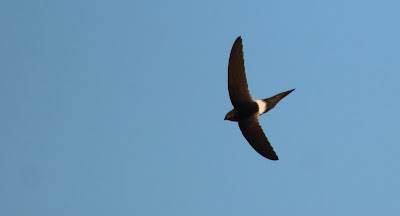


(Vencejo cafre)

Con el permiso de otras delicias como colimbos y charranes, las estrellas de los primeros 8 meses en Aberdeen han sido los patos, con eíderes por un tubo . . .


. . . eider real


 . . . pato arlequín


. . . porrones bastardos 


.
. . . y las tres serretas


Les echaré de menos estos meses de verano.

Cuando salí de Aberdeen la semana pasada los vencejos comunes acababan de llegar para llenar el cielo con sus gritos. Llegado en Extremadura, los vencejos de aquí han sido casi los primeros en llamarme la atención. En esta parte de España hay algunas pocas parejas del Vencejo Cafre. Llegan tarde, como pronto finales de abril, y luego buscan un nido de Golondrina Dáurica para echar al inquilino y apoderarse de una casa ya hecha, poniendo una pluma blanca en la entrada como una bandera de conquista. En vuelo se ve muy bien la forma de vencejo pero con un bonito obispillo blanco.


Mucho más comunes por aquí son los magníficos Vencejos Reales. Son los más grandes de su género y crían tanto en roqueda como en construcciones humanas como puentes y castillos. Son majestuosos voladores:


La semana que viene a Asturias. A ver si nos caen los Alcaudones Dorsirrojos, Treparriscos y Gorriones Alpinos de otros años, que difícilmente se ven en Aberdeen o Extremadura.


English translation of the text:

FROM ARCTIC DUCKS TO MEDITERRANEAN SWIFTS

The best thing about living at different times of the year in three such different places as northern Scotland (Aberdeen), the centre of Spain (Extremadura) and the north of Spain (Asturias) is that you see such a wide range of different birds.

Over and above other delights like divers and terns, the star turns of my first 8 months in Aberdeen have been the various species of arctic and subarctic ducks, with huge rafts of Eiders plus King Eider, Harlequin Duck, Scaup and the three sawbills  . . .

I’ll miss them all this summer.

When I left Aberdeen last week the first Swifts had just arrived, filling the evening skies with their screams. Back in Extremadura, the swift species of hereabouts were among the first to catch my attention. In this part of Spain there are a few scattered pairs of White-Rumped Swifts. They are late arrivers, at the earliest by late April. When they get here they search out a Red-Rumped Swallow’s nest to kick out the rightful owners and set up shop inside, sticking a white feather in the mouth of the taken-over next like a victory pennant. In flight they are obviously swift shaped but sporting a neat white rump.

Much more common around here are the magnificent Alpine Swifts. They are the biggest of their gender and breed both on natural cliffs and rocks and man-made constructions like bridges and castles. They are majestic fliers.


Next week, we’re off to Asturias. Let’s see if this year we’re lucky enough to see the Red-Backed Shrikes, Wallcreepers and Snowfinches of other years, species that are very difficult to see in Aberdeen or Extremadura.

lunes, 9 de marzo de 2015

¡Harley ha vuelto! / Harley is back!


¿Quién sabe qué pasa por la cabeza de un pájaro tan lejos de su hogar?


“Harley”, la mega rareza pato de Arlequín que llevaba casi tres meses frecuentado casi siempre el mismo trozo del río Don aquí en Aberdeen, de repente desapareció, sin verse durante una semana entera. Le dábamos por perdido, deseándole buen viaje a su tierra natal en Islandia y agradeciéndole la estancia entre nosotros.
Este finde, tan rápidamente como desapareció, reapareció. ¿Dónde había estado mientras tanto? ¿Explorando otro río y luego decidiendo que éste era más a su gusto? ¿Había empezado el viaje de vuelta, faltando coraje después de unos kilómetros y volviendo a lo seguro? ¿Quién sabe? Pero hay que disfrutar de este bis de un ave tan singular y carismática que pensábamos no ver más.


El plumaje le sigue cambiando y, a pesar de que esta primavera no se pondrá guapo del todo, los colores de adulto se dejan entrever en el plumaje marrón.


Es un placer verlo luchar contra los rápidos mientras se alimenta de las algas del fondo del río


Espero que se quede algunos días más entre nosotros...


English translation of the text:

Who knows what goes through the head of a bird so far from its home?

“Harley”, the mega rare Harlequin Duck who had spent nearly three months frequenting the same stretch of the River Don here in Aberdeen, suddenly disappeared, and wasn’t seen for a whole week. We gave him up for lost, wishing him bon voyage back to his birthplace in Iceland and thanking him for his stay amongst us.

But last weekend, just as quick as he went, he came back. Where on earth had he been meanwhile? ¿Exploring another river and then deciding he liked this one best, striking out on the homeward journey and losing courage part way? Who knows? We can only enjoy the encore given by this singular and charismatic bird we thought we’d never see again. 

The plumage is still gradually changing. This spring he won’t get the full breeding plumage but you can already see the adult bluey sheen peeping through the brown.

It’s a real delight to watch him riding the whitewater while diving to pick up algae from the river bed.


Let’s hope he stays with us a bit more...


miércoles, 4 de febrero de 2015

Harley el Arlequín / Harley the Harlequin


Os presento a Harley, que ya ha salido otras dos veces en este blog, pero, esta vez, de forma algo más personal.

Es muy interesante poder tener un ave como esta, en la que el paso de joven macho a macho adulto es tan tremendo en cuanto a plumaje. Cuando Harley llegó aquí, no era más que un simple pato marrón con un mancha blanca en la cabeza, pero ahora está empezando a sufrir cambios. Ya empieza a aparecer la seguna raya blanca del cuello y también va adquiriendo ese azúl metálico que define a los machos de esta especie.


El antes


Y el después

Hoy he podido disfrutar de él a solas, sin ningún otro pajarero, que siempre es algo muy bonito. Poder estar sentado en la orilla, viendo como nada, como se mueve, como bucea y saber que solo estás tú disfrutando del momento.


En un momento de la mañana decidió salir del agua a escasos metros de donde yo estaba sentado, como ya nos tiene acostumbrados. Es genial poder ver un ave tan relajada a pocos metros de personas que solo quieren disfrutar de ella.


Para terminar esta entrada os dejo un video de Harley mientras se alimenta y también una foto de los omnipresentes mirlos acuáticos que alegran el río con sus bajos pero elaborados cantos.


English translation of the text:

Meet Harley. He’s already featured in this blog but this post is somewhat more personal.
It’s fascinating to have a bird like this on your doorstep, to be able to see the young bird slowly morphing, almost feather by feather,  into the adult drake plumage. When Harley first got here to Aberdeen he was just a brownish duck with a white smudge on his cheek, but now he’s slowly changing. The second neck strip is beginning to appear and the lovely metallic sheen between the two of them. After the first close-up photo, the next two show the “before” and “after of Harley for you to see how he’s changing.

Today I was able to enjoy watching him completely alone with no other twitcher on the spot. It’s a real thrill to be able to sit down on the river bank and watch him at such close quarters while he swims about and dives under water and realise you’re the only person watching him at that moment.
After swimming about for a bit he decided to haul out on a rock only a few metres from where I was sitting, as is his wont. It’s brilliant to be able to see a bird so relaxed sitting only a few metres from people who only want to enjoy watching him.


I’ll wind up with a video showing Harley’s white-water skills while feeding and a last photo of one of the ubiquitous dippers, whose quiet warbling is a constant feature of the river at the moment.

martes, 20 de enero de 2015

EL SHOW DEL PATO ARLEQUÍN / MORE HARLEQUIN DUCK

Teniendo un ave como el pato arlequín tan cerca de casa es imposible resistirse a ir a verlo, y ya he ido tres días seguidos a disfrutar de este visitante islándico. Con el tiempo empiezas a conocer sus costumbres y esto te da muchas oportunidades para hacerle mejores fotos de las que tenía. El bicho se mueve en unos 400m del río y, normalmente, cuando los canoistas ocupan el río, el pato sube a unos de sus rápidos favoritos y es ahí donde se acerca a muy pocos metros.


Es un pájaro muy activo, siempre está nadando a contracorriente y alimentandose frenéticamente. Cada cierto tiempo se sube a alguna roca para descanar, ya que su forma de alimentarse es muy agotadora.


Una vez que ha descansado unos minutos y se ha arreglado el plumaje, ¡Vuelta al agua!


Es una gozada poder verlo como en su casa, en río con corriente y rápidos muy fuertes. Parece que se ha asentado muy bien. A ver si con suerte se queda con nosotros muuucho tiempo.


(Pose: pato torrentero)

Es un pato treméndamente confiado y, si te sientas en la orilla del río, él mismo viene a verte, colocándose a escasos 2m!!!


Una foto del Arlequín con algo de nieve Aberdoniana


Para terminar la entrada, un par de fotos de otros de habitantes del río que, aunque no tan escasos, son de lo más bonitos, la serreta grande y porrones osculados.


English translation of the text:

When you’ve got a mega like Harlequin Duck on your doorstep it’s impossible to resist the temptation of seeing it often; I’ve now been able to enjoy this Icelandic visitor three days on the trot. With time you begin to learn its habits, improving photo opportunities. The duck moves about within a 400 m stretch of river. When the canoeists take to the river the duck usually moves upstream to one of its favourite rapids, and it’s here where it comes really close.

It’s a very active bird, always swimming against the current in a constant feeding frenzy. Every now and then it hauls out on a rock to rest up from its energy-burning feedings style. After a few minutes resting and preening (which is when it looks most like a Torrent Duck), it slips back into the water to find more food.

It’s a real delight to be able to watch it riding the surf so masterfully and at such close quarters. It seems to be really at home here. With luck it will stay around a lot longer.

It’s terrifically tame and inquisitive. If you just sit quietly on the bank the duck itself seems to mosey over to check you out, coming down to 2m!!!


I’ll wind up this blog post with a couple of photos of other ducks that are frequenting the river at the moment. Although not nearly so rare they are certainly beautiful. The drake goosander I caught in flight and the group of two drake and three duck goldeneyes in a quieter stretch of the river.

sábado, 17 de enero de 2015

PATO ARLEQUÍN / HARLEQUIN DUCK

Como ya mencioné en una entrada anterior, mientras yo había vuelto a España por las vacaciones de navidad, había aparecido un PATO ARLEQUÍN a, literalmente, 100m de mi casa aquí en Aberdeen. Todos los días que he pasado en España, los he pasado mirando la página web donde publican las citas de aves raras en el Noreste de Escocia. Cada día estaba más emocionado al ver que el bicho seguía aguantando en el mismo lugar.

Hoy he vuelto a Aberdeen. Cogí el avión desde Madrid ayer a las 9pm y aterricé en Edimburgo sobre las 11pm. Luego un tren a las 5 de la mañana que me ha dejado en Aberdeen a las 8. Nada más llegar, a pesar de no haber dormido nada en un día entero, ha sido soltar el equipaje, coger cámara y prismáticos y tirarme al río.


Al llegar al parque ya he visto los primeros pajareros que corrían río abajo y, como no, yo los he seguido. El primer contacto con el ave me ha recordado al encuentro que tuvimos con el pato torrentero en Chile. Es una pasada cómo un bicho tan pequeño se maneja tan bien en los rápidos. Podría llamarse Pato cortacorrientes islándico!


Lo pudimos ver de todas las maneras posibles; es un pájaro muy activo que no para de un lado para otro, aunque a veces se sube a las rocas, y es entonces cuando sí que parece un pato torrentero.


Comparativa de los dos

Hubo un momento en el que se acercó demasiado para algunos fotógrafos!


Para terminar esta entrada os pongo una foto de cuando decidió irse río arriba, aunque luego sería reencontrado. Espero que esta no sea la única entrada que haga sobre este increíble pato.


English translation of the text:

As I mentioned in an earlier blog post, while I was at home in Spain during the Christmas holidays, a Harlequin Duck turned up literally 100 metres from my hall of residence here in Aberdeen. Every single day in Spain I’ve been checking into the NE-Scotland hotline site with bated breath to see it if was still there. And every day it stayed on I became more excited.

Today I at last got back to Aberdeen. I took the plane from Madrid at 9pm last night and touched down in Edinburgh at about 11 pm. Then I caught a train at 5 am that brought me into Aberdeen at 8. As soon as I got to my room, despite a sleepless night in airports and stations, I threw down my bag, grabbed my camera and ran to the river.

As soon as I arrived on the spot I saw some birders running downriver so I followed in their wake. The first sight of the bird reminded me of the Torrent Duck we saw in Patagonia. It’s amazing how a bird so small can handle the rapids so masterfully. Instead of Harlequin Duck it should really be called Icelandic Torrent Duck!

It’s a restless little bird and we saw it running through its whole repertoire, swimming back and forth, diving and sometimes perching on rocks. This is when it most looks like the Torrent Duck and I include a photo to show the similarity. On some occasions it came too close to photograph!

I’ll wind up this post with a shot of it flying upriver though we did actually relocate it later. I hope this won’t be my only blog post on this incredible white-water duck.