martes, 2 de junio de 2015

De patos árticos a vencejos meditteráneos / From arctic ducks to Mediterranean swifts

Lo bueno de vivir durante el año en tres sitios tan sumamente diferentes como el norte de Escocia (Aberdeen), el centro de España (Extremadura) y el norte de España (Asturias) es que ves una gama muy variada de aves.
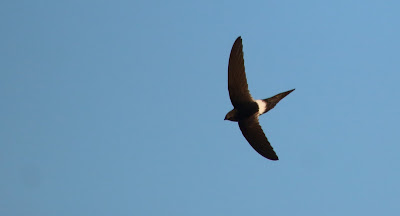


(Vencejo cafre)

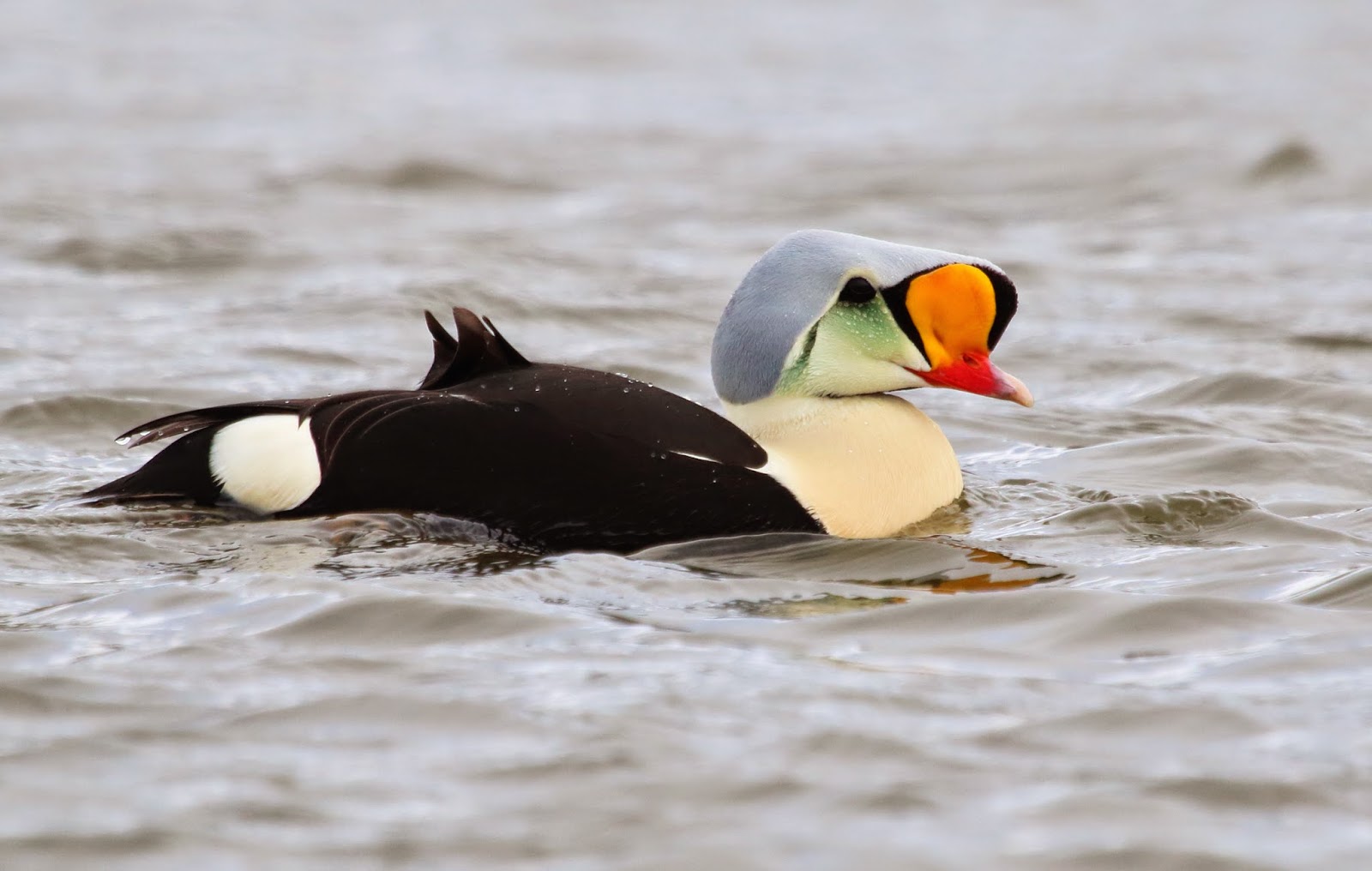
Con el permiso de otras delicias como colimbos y charranes, las estrellas de los primeros 8 meses en Aberdeen han sido los patos, con eíderes por un tubo . . .


. . . eider real


 . . . pato arlequín


. . . porrones bastardos 


.
. . . y las tres serretas


Les echaré de menos estos meses de verano.

Cuando salí de Aberdeen la semana pasada los vencejos comunes acababan de llegar para llenar el cielo con sus gritos. Llegado en Extremadura, los vencejos de aquí han sido casi los primeros en llamarme la atención. En esta parte de España hay algunas pocas parejas del Vencejo Cafre. Llegan tarde, como pronto finales de abril, y luego buscan un nido de Golondrina Dáurica para echar al inquilino y apoderarse de una casa ya hecha, poniendo una pluma blanca en la entrada como una bandera de conquista. En vuelo se ve muy bien la forma de vencejo pero con un bonito obispillo blanco.


Mucho más comunes por aquí son los magníficos Vencejos Reales. Son los más grandes de su género y crían tanto en roqueda como en construcciones humanas como puentes y castillos. Son majestuosos voladores:


La semana que viene a Asturias. A ver si nos caen los Alcaudones Dorsirrojos, Treparriscos y Gorriones Alpinos de otros años, que difícilmente se ven en Aberdeen o Extremadura.


English translation of the text:

FROM ARCTIC DUCKS TO MEDITERRANEAN SWIFTS

The best thing about living at different times of the year in three such different places as northern Scotland (Aberdeen), the centre of Spain (Extremadura) and the north of Spain (Asturias) is that you see such a wide range of different birds.

Over and above other delights like divers and terns, the star turns of my first 8 months in Aberdeen have been the various species of arctic and subarctic ducks, with huge rafts of Eiders plus King Eider, Harlequin Duck, Scaup and the three sawbills  . . .

I’ll miss them all this summer.

When I left Aberdeen last week the first Swifts had just arrived, filling the evening skies with their screams. Back in Extremadura, the swift species of hereabouts were among the first to catch my attention. In this part of Spain there are a few scattered pairs of White-Rumped Swifts. They are late arrivers, at the earliest by late April. When they get here they search out a Red-Rumped Swallow’s nest to kick out the rightful owners and set up shop inside, sticking a white feather in the mouth of the taken-over next like a victory pennant. In flight they are obviously swift shaped but sporting a neat white rump.

Much more common around here are the magnificent Alpine Swifts. They are the biggest of their gender and breed both on natural cliffs and rocks and man-made constructions like bridges and castles. They are majestic fliers.


Next week, we’re off to Asturias. Let’s see if this year we’re lucky enough to see the Red-Backed Shrikes, Wallcreepers and Snowfinches of other years, species that are very difficult to see in Aberdeen or Extremadura.

lunes, 25 de mayo de 2015

Eider real, piquicorto y despedida

Esta va a ser la última entrada que haga desde Escocia hasta Agosto. Mañana vuelvo a España para pasar un par de meses de verano en casa y recargar las pilas para el año que viene. Asi que hoy, mi último día, he decidido pasarlo en el estuario del Ythan, como no podía ser de otra manera.

El tiempo no ha sido muy bueno, pero entre tormenta y tormenta he podido hacer algunas fotos y disfrutar de las principales aves del estuario. El primero en dejarse ver ha sido el famoso eider real que ya lleva por aquí un mes. ¡Qué bicho tan espectacular! Es el pato más bonito presente en el Reino Unido ahora con diferencia.


Hoy solo lo he podido ver durante unos cinco minutos, justo antes de que decidiera despegar y salir a mar abierto.


Por lo caminos del estuario los más comunes eran los escribanos cerillos.


Pero la sopresa del día ha sido encontrar un ánsar piquicorto en el estuario. Y además uno relativamente confiado. Estas son aves comunes aquí arriba, pero no me canso de verlas, y más cuando en España es una especie no fácil de ver.


Y para terminar esta entrada os muestro a los que han dado un show espectacular esta mañana, los charranes. Jamás había visto tantos charranes juntos en mi vida. Os dejo un vídeo para que disfrutéis del espectáculo vosotros también. El grupo está formado por patinegros, comunes y árticos.


Voy a echar de menos este lugar...


English translation of the text:

KING EIDER, PINK FOOT AND SO LONG FOR NOW

This will be my last blog post from Scotland until next August. Tomorrow I’m flying back to Spain to spend summer there and charge up my batteries for next academic year. So I decided to spend my last day for now, fittingly, at Ythan estuary.

The weather was dodgy but between downpour and downpour I managed to get some snaps and enjoy the estuary’s main birds. One of the first to put in a showing was the famous King Eider, which has been here one month now. Such a stunning bird! The loveliest duck in the UK at the moment by a long way.

Today I was able to see it only for  about five minutes before it flew out to sea.

The commonest byway bird around here is the Yellow Hammer.

But today’s surprise package was a Pink-Footed Goose, quite a tame one too. These are common wintering birds up here but I never get tired of seeing them, especially when they’re so hard to see in Spain.

I’ll sign off with a video of the spectacular tern show this morning. Never have I seen so many together in my life. The group is made up by Sandwich, Common and Arctic Terns.


I’m going to miss this place...

sábado, 9 de mayo de 2015

¡AHORA SÍ! / PUFFINS GALORE!

No se ni como empezar esta entrada de todas las fotos y aves que tengo que mostraros. Voy a empezar con un aperitivo del que fue el protagonista del día, aunque seguido de cerca por otras aves.


(Frailecillo atlántico)

Ayer volví a casa con 1200 fotos. Alguien me tiene que controlar cuando voy a estos sitios porque me vuelvo loco con tanto pájaro. Las colonias de aves marinas te atrapan con sus sonidos y olores. Ayer salí de casa a la 1 y volví a las 9. 

Antes de visitar la colonia hice una parada rápida en el estuario del Ythan, donde pude ver al eider real no muy cerca y donde fui recompensado con una pareja de charrancitos pescando muy cerca.


Era la primera vez que he disfrutado de estas golondrinas del mar tan cerca. Su forma de pescar es bastante más delicada que la de otros charranes, dejandose caer sobre el agua y cogiendo peces de la superficie.

Después de esto me fui a la colonia de aves marinas Bullers O´Buchan, donde mi principal objetivo eran los frailecillos y que voy a dejar para el final.

El día fue bastante ventoso, lo que daba muchas oportunidades para hacer fotos en vuelo de alacas y araos sobre todo.


Son verdaderos misiles que, a veces, te pasan volando a menos de 1m!

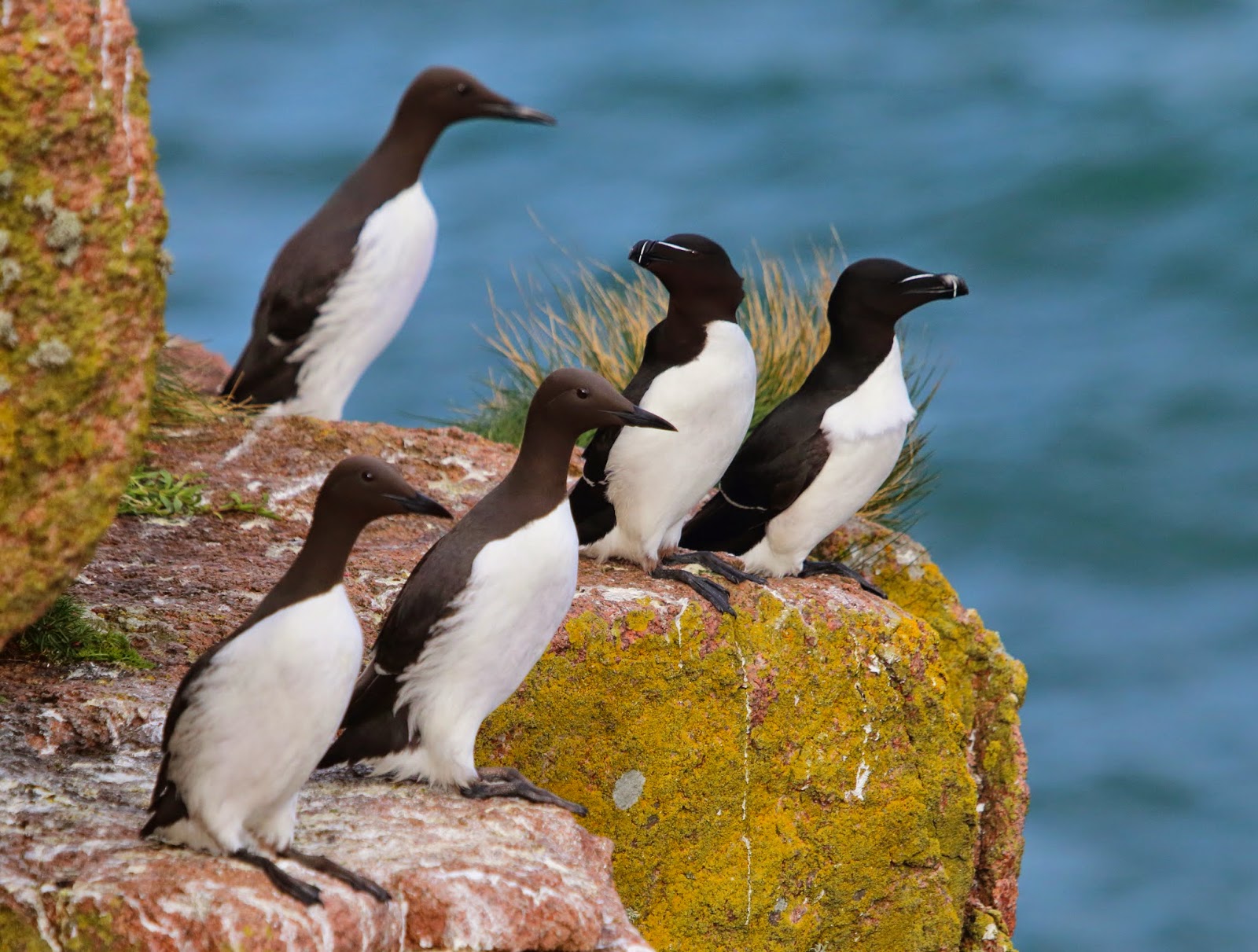
En un par de sitios los araos están encima de los acantilados y te dejan acercarte todo lo que quieras. 


Te quedas maravillado mientras disfrutas de estas aves a escasos metros. Hubo un arao que lleguó volando y se posó justo en el límite de mi distancia de enfoque...


Ese color y textura de chocolate que tienen es tremendo.

Seguimos ahora con sus primas las alcas, que para mí están ahí en el top 3 junto con el frailecillo y arao aliblanco en el ranking de aves marinas.


Las alcas son las terceras más comunes de los alantilados después de los araos y gaviotas tridáctilas, aunque no tiene problemas para compartir piso.


Las alcas prefieren la parte alta de los acantilados, lo que te da bastante oportunidades para verlas de cerca.


Bueno, creo que ya es hora de presentaros a los protagonistas del día, los preciosos duendecillos del mar, que cada vez que los veo me sorprenden por su pequeño tamaño.


Se empeizan a congregar en los acantilados sobre las cinco, que es cuando vuelven de pasar el día en el mar pescando.


No me puedo quejar de lo afortunado que soy al tener estos espectáculos tan cerca de casa.


Esta entrada llega a su fín. Ya me queda menos de un mes por estos lares antes de volver a España en verano.


English translation of the text:

I hardly now how to begin this post, I’ve got so many bird photos to show you. I’ll start with a trailer of the star of the day, albeit closely followed by other goodies.

Yesterday I got back home with 1200 photos. These places send me snap happy. Seabird colonies bewitch you with their sounds and colours. I left home at 1 and got back at 9.

Before visiting the colony I dropped into Ythan estuary, where I saw the king eider in the middle distance and I was rewarded for the visit by a pair of little terns fishing nearby. It’s the first time I’ve seen these gorgeous seaswallows so close up. Their fishing strategy is much more delicate than the other terns, swooping down and grapping fish fry from close to the surface.

Then I made my way to the seabird colony at Bullers O´Buchan. My main target bird was the puffin, so I’ll leave it till last.

The day was pretty windy, giving me many chances to snap razorbills and especially guillemots in flight.

They shoot by like missiles, sometime passing closer than 1m!

In a couple of places the guilles are right on top of the cliffs and let you come as close as you like.
They’re stunning birds to see so close up, with their rich chocolate-brown livery. One flew in while I was there and perched right on the inner limit of my focus range.

The next photos are of their cousins, the razorbills, for me one of the top 3 seabirds along with puffin and tystie.

The razorbills are the third most common cliff residents after the guillies and kittiwakes, although they’re quite prepared to share the same ledge, as the photos show.

The razorbills prefer the higher part of the cliffs, making them easier to photograph.

So, after this long preamble, enter the star of the day, the wonderful sea gnome, the puffin. Every time I see them I’m surprised how small they are.

They start coming into the cliffs at about 5 pm after spending all day fishing at sea.

I really can’t believe my luck at having these stunning birds so close to home.

So this post comes to its end. I’ve now got only one month left until going back to Spain in summer.