Mostrando entradas con la etiqueta Eider común. Mostrar todas las entradas

domingo, 17 de enero de 2016

Eiders, mérgulos y otras aves del norte

De vuelta en Escocia tras las vacaciones de Navidad y parece que por fin ha entrado algo de frío. La semana justo antes de venir un temporal barrió Escocia de costa a costa causando muchas inundaciones, pero también trayendo muchas aves. Los vientos del este pegaron los mérgulos a la costa y desde Aberdeen se llegaron a ver pasar más de 1000 por hora, un auténtico espectáculo, con algunos apareciendo en jardines y carreteras.

Yo llegué un día tarde y solo pude ver uno, aunque siempre es una alegría disfrutar de un bicho como este.


La mar estaba muy agitada y las aves buscaban refugio en puertos y bahías. Los piratas como este págalo parasito también se acercaron a la costa para aprovecharse de ello.


Las olas rugían con fuerza contra los espigones.


Ya pasado el temporal llegan días de frío pero de calma, así que decidimos hacer una visita al estuario del Ythan.

Los protagonistas, como siempre, son los eiders, que ya están en pleno cortejo con las hormonas revolucionadas.


A lo largo de la mañana pudimos ver también un esmerejón, 2 becadas y, como más interesante, 3 porrones bastardos, 2 hembras y un macho.


Muchas limícolas invernan en el estuario; correlimos comunes, gordos y tridácticlos, archibebes comunes, ostreros,etc. Entre ellas también estaba una de las aves con la migración más larga del mundo, la aguja colipinta.


De un ave migratoria a tres residentes. Primero un ave de presa, el ratonero, que es abundante pero no se suele ver mucho por el estuario.


La segunda ave residente son los tristemente inapreciados estorninos pintos, que cuando se ven de cerca son una pasada.


Por último, el verderón o, en este caso, verderona que se alimentaba de semillas del suelo.


Translation of the text:

EIDERS, LITTLE AUKS AND OTHER NORTHERN BIRDS

I’m now back in Scotland after the Christmas holidays and it seems some cold weather has arrived at last. One week before I got back a tremendous storm swept Scotland from coast to coast, flooding many areas and blowing in many birds. The easterlies brought the Little Auks in close to the coast or even inland. More than 1000 an hour were streaming past Aberdeen, a stunning sight, and some even turned up in gardens and on roads.

I got back a day too late to see this spectacle but I did manage to see one of these incredible birds.
The sea was still rough and birds were seeking shelter in ports and harbours. The pirate species like the Arctic Skua also came in to the coast on the lookout for easy pickings.
The waves were lashing against the sea walls.

After the storm there were a few calm, cold days, so we decided to visit Ythan estuary.
The star turns as usual were the Eiders, now in full breeding plumage and in flat-out wooing mood, as you can see from the photos and see and hear in the video.

Throughout the morning we also saw a Merlin, 2 Woodcocks and, most notably, 3 Scaups, 2 ducks and a drake.

Many waders are wintering in the estuary; Dunlins, Knots, Sanderlings, Redshanks, Redshanks, Oystercatchers, etc. They also included the bird with the longest recorded nonstop migration journey, the Bar-Tailed Godwit, here shown in flight.

From a migratory bird to three year-round residents. First of all a Buzzard, an abundant bird but seldom seen in the estuary.

The second resident bird is the sadly underestimated Starling. Close up they’re stonkers.

Lastly a Greenfinch, gleaning seeds from the ground.

martes, 2 de junio de 2015

De patos árticos a vencejos meditteráneos / From arctic ducks to Mediterranean swifts

Lo bueno de vivir durante el año en tres sitios tan sumamente diferentes como el norte de Escocia (Aberdeen), el centro de España (Extremadura) y el norte de España (Asturias) es que ves una gama muy variada de aves.


(Vencejo cafre)

Con el permiso de otras delicias como colimbos y charranes, las estrellas de los primeros 8 meses en Aberdeen han sido los patos, con eíderes por un tubo . . .


. . . eider real


 . . . pato arlequín


. . . porrones bastardos 


.
. . . y las tres serretas


Les echaré de menos estos meses de verano.

Cuando salí de Aberdeen la semana pasada los vencejos comunes acababan de llegar para llenar el cielo con sus gritos. Llegado en Extremadura, los vencejos de aquí han sido casi los primeros en llamarme la atención. En esta parte de España hay algunas pocas parejas del Vencejo Cafre. Llegan tarde, como pronto finales de abril, y luego buscan un nido de Golondrina Dáurica para echar al inquilino y apoderarse de una casa ya hecha, poniendo una pluma blanca en la entrada como una bandera de conquista. En vuelo se ve muy bien la forma de vencejo pero con un bonito obispillo blanco.


Mucho más comunes por aquí son los magníficos Vencejos Reales. Son los más grandes de su género y crían tanto en roqueda como en construcciones humanas como puentes y castillos. Son majestuosos voladores:


La semana que viene a Asturias. A ver si nos caen los Alcaudones Dorsirrojos, Treparriscos y Gorriones Alpinos de otros años, que difícilmente se ven en Aberdeen o Extremadura.


English translation of the text:

FROM ARCTIC DUCKS TO MEDITERRANEAN SWIFTS

The best thing about living at different times of the year in three such different places as northern Scotland (Aberdeen), the centre of Spain (Extremadura) and the north of Spain (Asturias) is that you see such a wide range of different birds.

Over and above other delights like divers and terns, the star turns of my first 8 months in Aberdeen have been the various species of arctic and subarctic ducks, with huge rafts of Eiders plus King Eider, Harlequin Duck, Scaup and the three sawbills  . . .

I’ll miss them all this summer.

When I left Aberdeen last week the first Swifts had just arrived, filling the evening skies with their screams. Back in Extremadura, the swift species of hereabouts were among the first to catch my attention. In this part of Spain there are a few scattered pairs of White-Rumped Swifts. They are late arrivers, at the earliest by late April. When they get here they search out a Red-Rumped Swallow’s nest to kick out the rightful owners and set up shop inside, sticking a white feather in the mouth of the taken-over next like a victory pennant. In flight they are obviously swift shaped but sporting a neat white rump.

Much more common around here are the magnificent Alpine Swifts. They are the biggest of their gender and breed both on natural cliffs and rocks and man-made constructions like bridges and castles. They are majestic fliers.


Next week, we’re off to Asturias. Let’s see if this year we’re lucky enough to see the Red-Backed Shrikes, Wallcreepers and Snowfinches of other years, species that are very difficult to see in Aberdeen or Extremadura.

miércoles, 29 de abril de 2015

Un buen día de pajareo / A good birding day

El pasado lunes visitamos el estuario del Ythan otra vez para disfrutar de sus delicias, tanto las aves que están de paso como las que han regresado para criar.


(Eider común)

Empezamos con los clásicos del estuario, los eiders. El eider real también estaba por allí, pero solo lo pudimos ver con marea alta y muy lejos, asi que nos tuvimos que "conformar" con sus primos comunes.


No me canso de decir que son aves alucinantes y su reclamo les hace incluso más especiales; son sonidos que no cuadran para nada con la naturaleza. Para mostraros esto os pongo un pequeño video que les pude hacer.


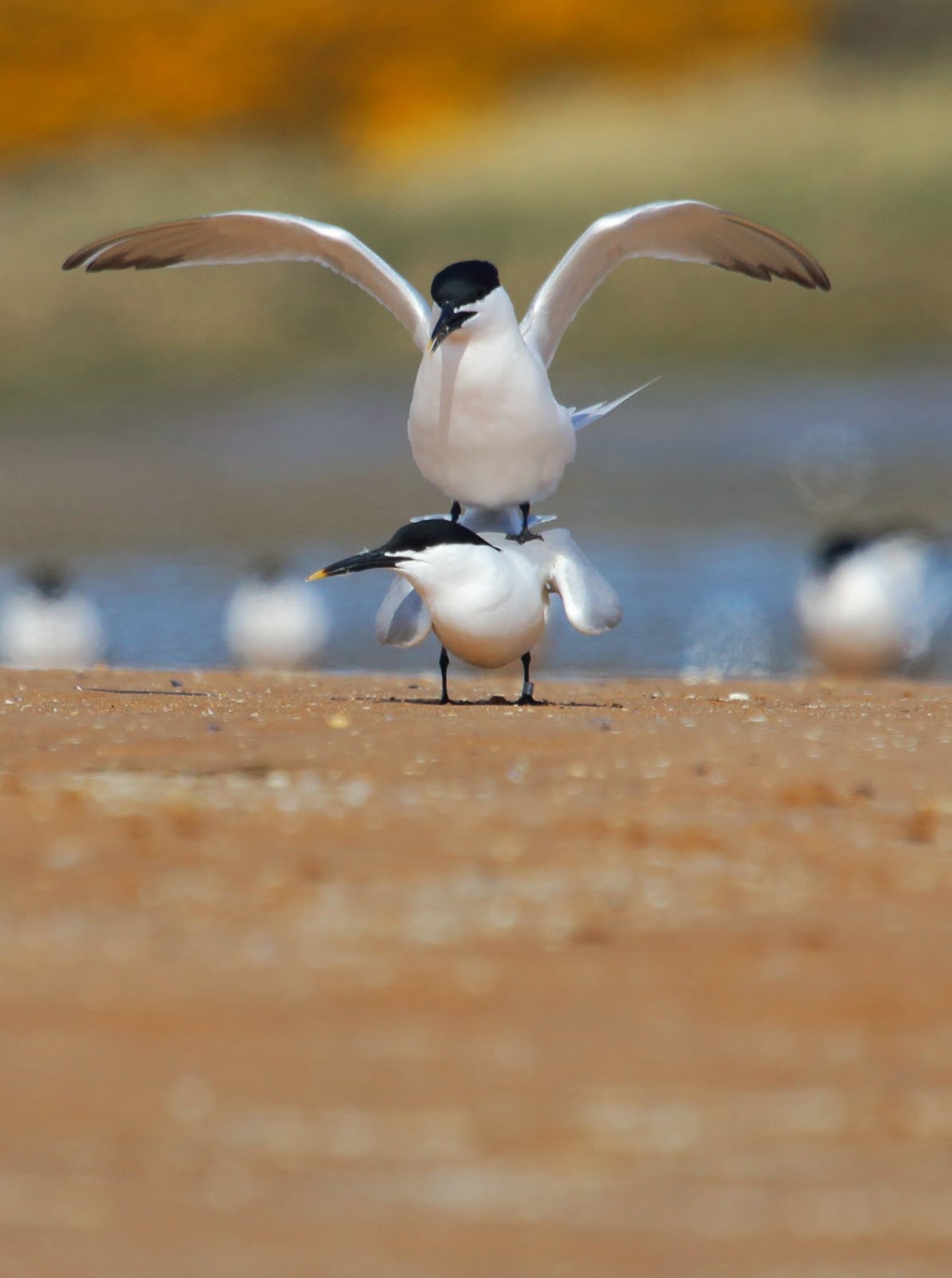
Las otras estrellas del estuario son los charranes. Ya han llegado las 4 especies que crían aqui: patinegro, común, ártico y charrancito, aunque de los últimos solo pudimos ver un par.

Los patinegros están en plena época de cortejo


La formas que hacen cuando está posados son estéticamente preciosas, sobre todo cuando bajan las alas y separan los hombros del cuerpo, como el ave de la derecha en esta foto,


Como podéis ver, muchos estaban anillados. Seguimos pendientes de la contestación, pero ya sabemos que alguno de los que vimos nació en el 2002 y que el bicho que está en el centro de la foto fue visto el día anterior en Aberdeen precisamente.

No paraaban de volar y pescar por todo el estuario. Es un verdadero especátuclo de acrobacias y sonidos.


También pude hacer alguna fotos a los charranes comunes que compartían sitio con los patinegros.


Alucinante también fueron los limícolas que están en paso, ahora casi todos en plumaje nupcial, como estos correlimos comunes.


O también estos chorlitos dorados con sus galas de verano.


La guinda del pastel la puso una barnacla carinegra, especia escasa en esta costa, que decidió darnos un pase muy cerca mientras fotografiábamos a los charranes. Fue una muy grata sorpresa.


Un día estupendo en el campo en el que recorrimos más de 20km andando, aunque con el tiempo muy loco. La semana pasada tuvimos más de 15 grados y la mañana en el Ythan la empezamos pisando nieve... Este país se tiene que aclarar con el tiempo!

English translation of the text:

Last Monday we went back to Ythan estuary to enjoy all the goodies on offer, both the returning breeders and the passage migrants.

We start off with the resident star turn: the eiders. The king eider was also there but a long way off at high tide so we had to “make do” with his commoner cousins.

I never tire of these truly stunning birds; their otherworldly calls make them even more special. Listen to them in this video.

The other stars of the estuary now are the terns. The four breeding tern species are all back now, sandwich, common, arctic and little, though we saw only a pair of the latter.

The sandwich terns are in mating and courting frenzy right now, as you can see from the photos.
Their shapes when perched are stylistically perfect, especially when they drop their wings and spread their shoulders wide, like the bird on the right in the photo.

As you can see, many of them were ringed. Pending further details, we already know that some we saw were born in 2002.

They never stopped flying and fishing around the estuary, a spectacular show of acrobatics and calls.
One good “tern” deserves another, so I also snapped a few of the common terns that were hanging out with them.

A wonderful show too from the passing waders, nearly all of them now in their summer best, like the dunlins and golden plovers in the photos.

The icing on the cake came when a light bellied brent goose flew by really close, not all a common species on this coast and a delightful surprise to end the day.


A wonderful day in the country when we walked over 20 km, though the weather was crazy. Last week we were basking in 15+ degrees and this morning in Ythan we were crunching through snow. The weather here needs to make its bloody mind up!