He venido a Escocia para estudiar Biología marina en la Universidad de Aberdeen y este será mi hogar para los próximos 4 años. En este blog espero poder mostraros la riqueza "pajaril" que tiene esta zona de Esocia y que poco a poco iré descubriendo con el tiempo. /
The idea of this blog is to give a Spanish take on the birdlife of Aberdeen. Thanks to everyone how has followed me here from my former blog in Spain (Aves de la Vera y su Entorno).
Ayer domingo no me apetecía salir a pajarear muy lejos de casa, por lo que decidí ir a la desembocadura del río Don. Está a solamente 10 minutos andando desde donde vivo y, una vez allí, se puede andar por la playa durante kilómteros y kilómetros si se quiere.
La playa tenía lo habitual para estas fechas y para estas latitudes. Me estoy acustumbrando a ver todas estas especies tan norteñas que cuando aparecen en España se arma una buena.
El show esa mañana lo dieron los haveldas, con un grupo de unos 10 pero en el que solo había un macho adulto.
Por alguna razón decidieron acercarse mucho a la orilla esa mañana, así yo decidí hacer lo mismo y me metí hasta las rodillas en el agua.
Después de dos minutos tuve que salirme porque el agua estaba tan fría que había dejado de sentir los pies...
Después de que se fuera este bonito macho, los jóvenes y hembras decidieron acercarse un poco más a donde yo estaba.
Para terminar esta entrada os dejo con un par de fotos de otros habitantes de la playa, una corneja y correlimos oscuros.
English translation of the text:
On Sunday I didn’t really fancy going far so I just nipped
down to the mouth of the River Don, only ten minutes’ walk from my halls of
residence. From there I can stroll along miles of deserted beach. Everything
was pretty much as you’d expect at this time of year. I’m growing used to
seeing every day these northern species that always make such a big splash
whenever they turn up in Spain.
The star turn his morning was the long tailed ducks, a group
of about 10 with only one adult male.
For some reason they decided to float in
closer to the beach this morning, so I decided to meet them half way and wade out
up to knee height. After about two minutes I had to get out again because I
could no longer feel my feet...
I’ll wind up this entry with a couple of photos of other
beach denizens: a carrion crow and some purple sandpipers.
Aunque ya os he anticipado la estrella de la entrada, la voy a dejar para el final.
Esta mañana, con un frío tremendo, decidimos ir al estuario del río Ythan otra vez, justo antes de que lleguen las vacaciones y vuelva para España.
Comenzamos la mañana andando por la dunas para intentar sacar algún escribano nival, pero no hubo suerte, asi que decidimos irnos para la boca del estuario. Allí no estaban esperando ya los primeros eiders del día, junto con serretas medianas y algunos limícolas.
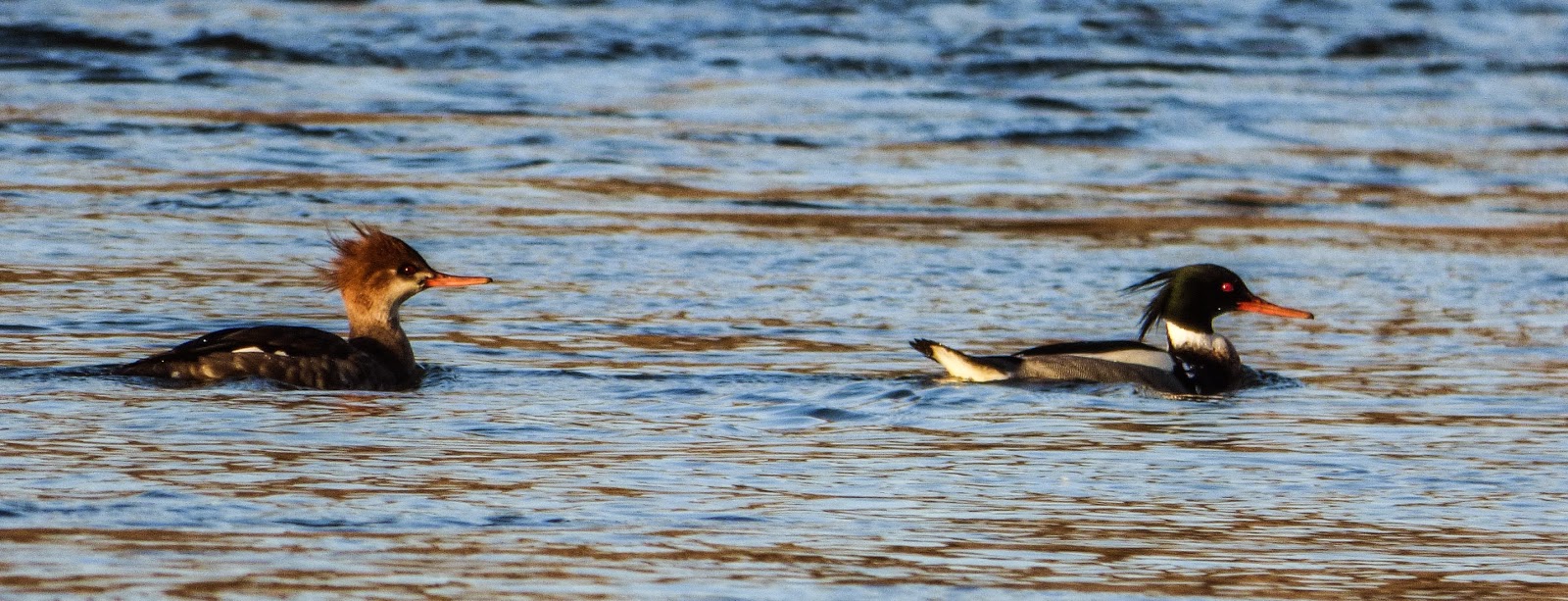
Las serretas medianas parecían empezar con los cortejos y ya se ven muchas parejas asentadas.
Los correlimos tridáctilos le dan mucha vida a los arenales...
Decidimos regresar siguiendo la orilla por si nos encotrábamos con alguna sorpresa y más patos se apuntaron a la fiesta. Dos de los más bonitos fueron los Ánades silbones y, por supuesto, el porrón osculado.
Depués de esto, por fin, llegamos al protagonista del día. Encontramos una preciosa pareja de haveldas y el macho ya estaba en su plumaje nupcial. ¡Menudo pajaro más espectacular!. Sin duda, uno de los patos más bonitos de Europa... Os dejo un video y un par de fotos de ellos.
English translation of the text:
LONG TAILED DUCKS IN BREEDING PLUMAGE!
The title has already given away the star turn of this post,
but I’ll leave it to the end.
This morning, with brass monkey’s weather, we decided to go back to the
wonderful Ythan estuary, just before the holidays come and I fly back to Spain.
We started off by patrolling the dunes in search of snow buntings but lucked
out, so then we made our way to the estuary proper. Waiting for us there were
the first eiders of the day together with red-breasted mergansers and a few
waders.
The r.b. mergs are now getting frisky and a few pairs
look to have mated up already.
The sanderlings liven up the beach with their
clockwork-toy surf running, bunching together in between times...
We decided to walk back along the edge of the water in
search of any surprises and add to the day’s duck list. Two of the most
beautiful ducks – well, drakes in this case – were the wigeon and the gorgeous
goldeneye.
Then at last we came to the best of all. We found a stunning
pair of long-tailed ducks with the drake already in breeding plumage. What a
stunning duck! Without doubt one of the most beautiful ducks in Europe. I’ll sign
off for now with a video and a couple of photos.
ES-PEC-TA-CU-LAR, esta es la única manera de describir el día de hoy. Tras una semana con un tiempo terrible, hoy ha sido el primer día que hemos visto el sol, y ¡Menudo día!.
Hoy he ido con un amigo inglés al estuario del rio Ythan, unas 11 millas al norte de Aberdeen. Llegamos allí sobre las 9 de la mañana en un día totalmente soleado y practicamente sin viento. A lo largo de toda la mñana hemos visitado las distintas partes del estuario, comenzando en la zona cerca de la desembocadura.
La primera ave que vimos fue una de las estrellas del día, un precioso macho de porrón bastardo. Lo vimos primero en la orilla contraria y, poco a poco, fue acercándose hasta llegar a donde estábamos nosotros. La luz era perfecta y el ave muy colaboradora. En estas condiciones la Lumix funciona bastante bien y se consigue bastante detalle.
Durante toda la mañana nos sobrevuelan miles de ansares piquicortos que se desplazan hacia los cultivos para alimentarse. Sigo sin acostumbrarme a ver miles; en España tienes suerte si ves uno.
Pude hacer alguna foto y algún video cuando nos sobrevolaban:
Tambien hice un pequeño vídeo de un grupo que nos sobrevoló
Los limícolas también aparecieron y los más llamativos fueron las dos agujas y tres combatientes.
Aguja colipinta
Combatiente
Aguja colinegra
Mientras nos desplazábamos de un sitio a otro los Escribanos cerillos amenizaban la caminata
Algunos de los patos más abundantes fueron los silbones europeos y las serretas grandes.
Y ahora llegamos al protagonista del día, el Eider. Para mí es el pato perfecto, Si Dios ha creado las aves, el Eider sería la primera que creó y el ganso del Nilo, la última... Hoy encontramos un grupo de unas 500 aves en la zona alta del estuario, en una zona muy calmada y sin viento. Ha sido uno de los mejores momentos del día.
Las aves estaban bastante cerca, aunque la mayoría de ellas estaban dormidas, por lo que tenía que sacar las fotos cuando se despertaban.
Hice un pequeño video para que os hagáis una idea del tamaño del grupo.
Para terminar el día, la guinda del pastel fue encontrar un Havelda entre los Eiders. Una auténtica pasada...
SPEC-TA-CU-LAR
is the only word to describe this morning’s outing. After a week of dreadful
weather, today was the first day the sun came out. And what a day it turned out
to be!
With an English friend from here called Alex Penn, today we went to the Ythan
estuary, about 11 miles north of Aberdeen city. We got there about nine on a
totally windless and sunny day. During the morning we visited the different parts
of the estuary, starting with the sea end.
Just about the very first bird we saw was one of the stars of the day, a lovely
drake scaup. We first saw it on the other side of the river but then it
gradually swam over to our side. The light was perfect and the bird very obliging. Under these
conditions the Lumix holds its own pretty well, though I’m still looking
forward to bringing my reflex here after christmas.
Thousands
of pink-footed geese flew over us during the whole morning, on their way to the
crop fields to feed. It’s still such a new experience for me to see so many. In
Spain you’re lucky to see even one.
I took a
few shots of them flying over and also a video so you can hear them as well.
Waders
began to turn up, including both godwits (bar-tailed and black-tailed) and
ruffs.
Handsome hedgerow
yellowhammers brightened up the walk from one part of the estuary to another.
Some of the
commonest ducks of the day were wigeon and goosanders
But the
commonest of all was the eider, vast rafts of them, most of the drakes in
breeding plumage now. For me it’s the perfect duck. If that god bloke created
birds, then he started off with the eider while he was still on top form and
ended up with the Egyptian goose and Muscovy duck when he was knackered... Today
we found a floating flock of about 500 in the sheltered, downriver part of the
estuary. Watching them was one of the best moments of the day.
Though
pretty close, most of the eiders were sleeping so I had to snap them whenever
they woke up.
I did a
quick video to give you some idea of the size of the flock. Turn up the sound
to hear their marvellous “Franky Howerd” calls.
To end the
day on a perfect note we found this lovely long-tailed duck tucked away amongst
the eider flock. A real gem to wind up with...